
New Boston NH – Pondless Waterfall
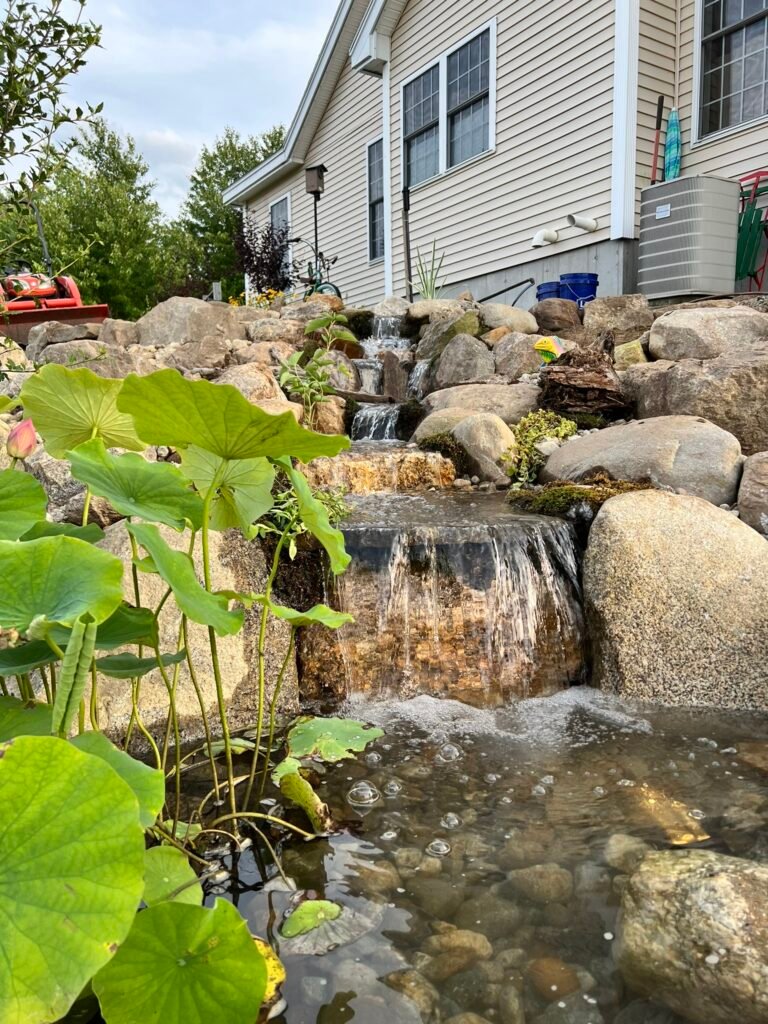
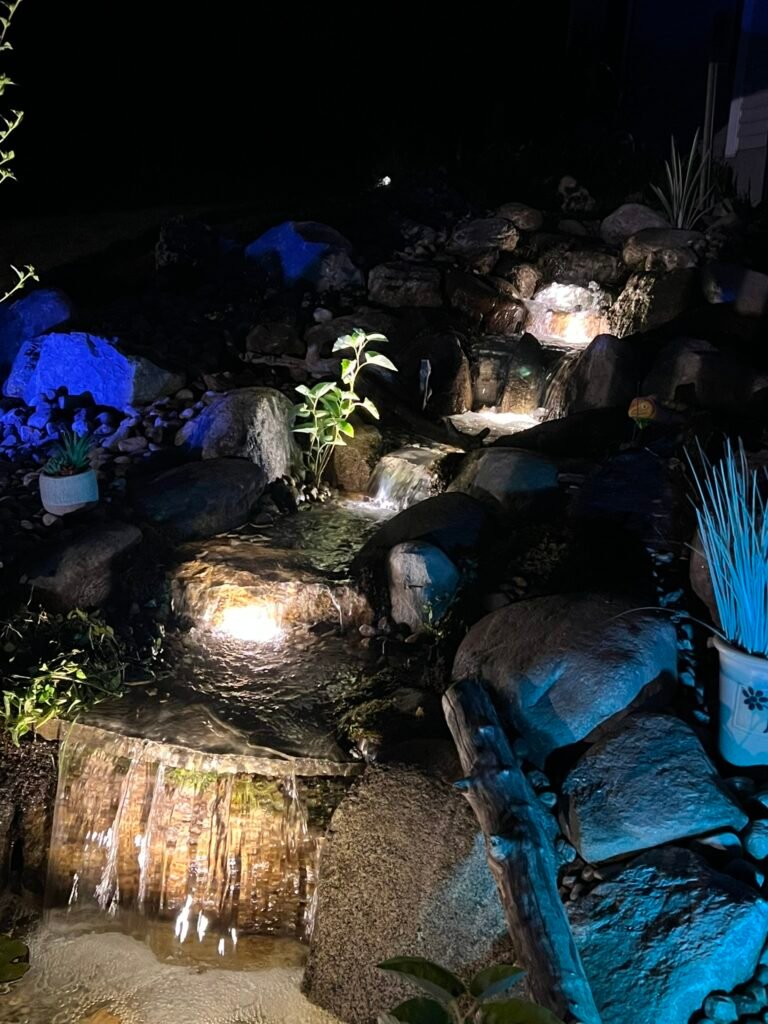
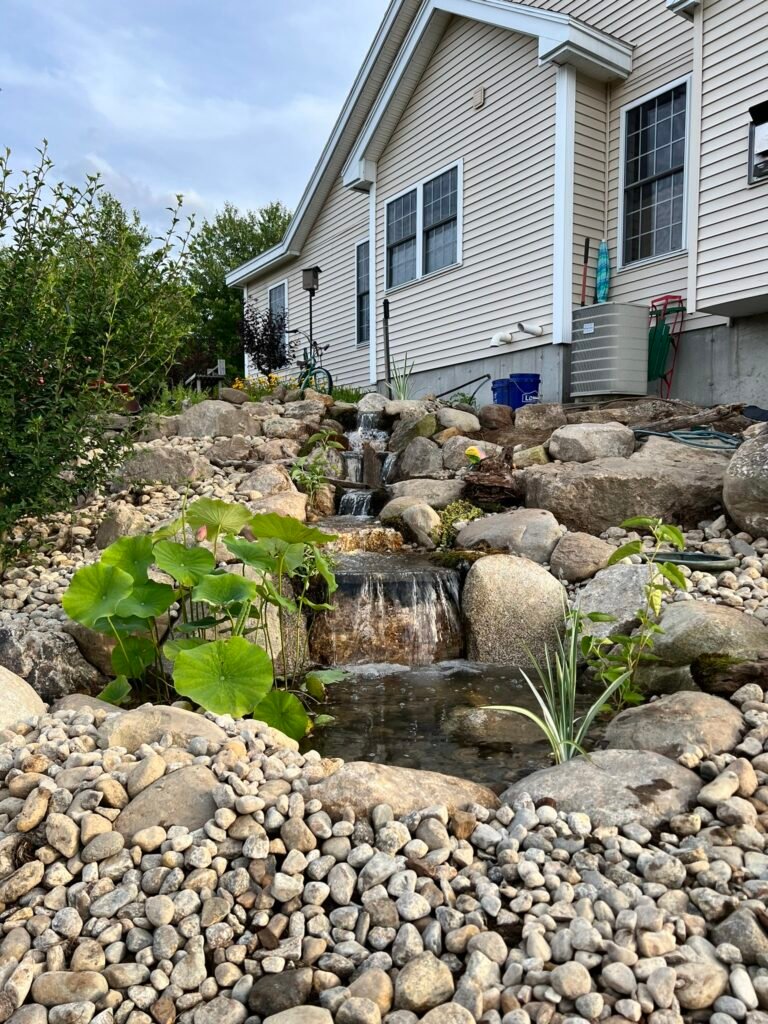
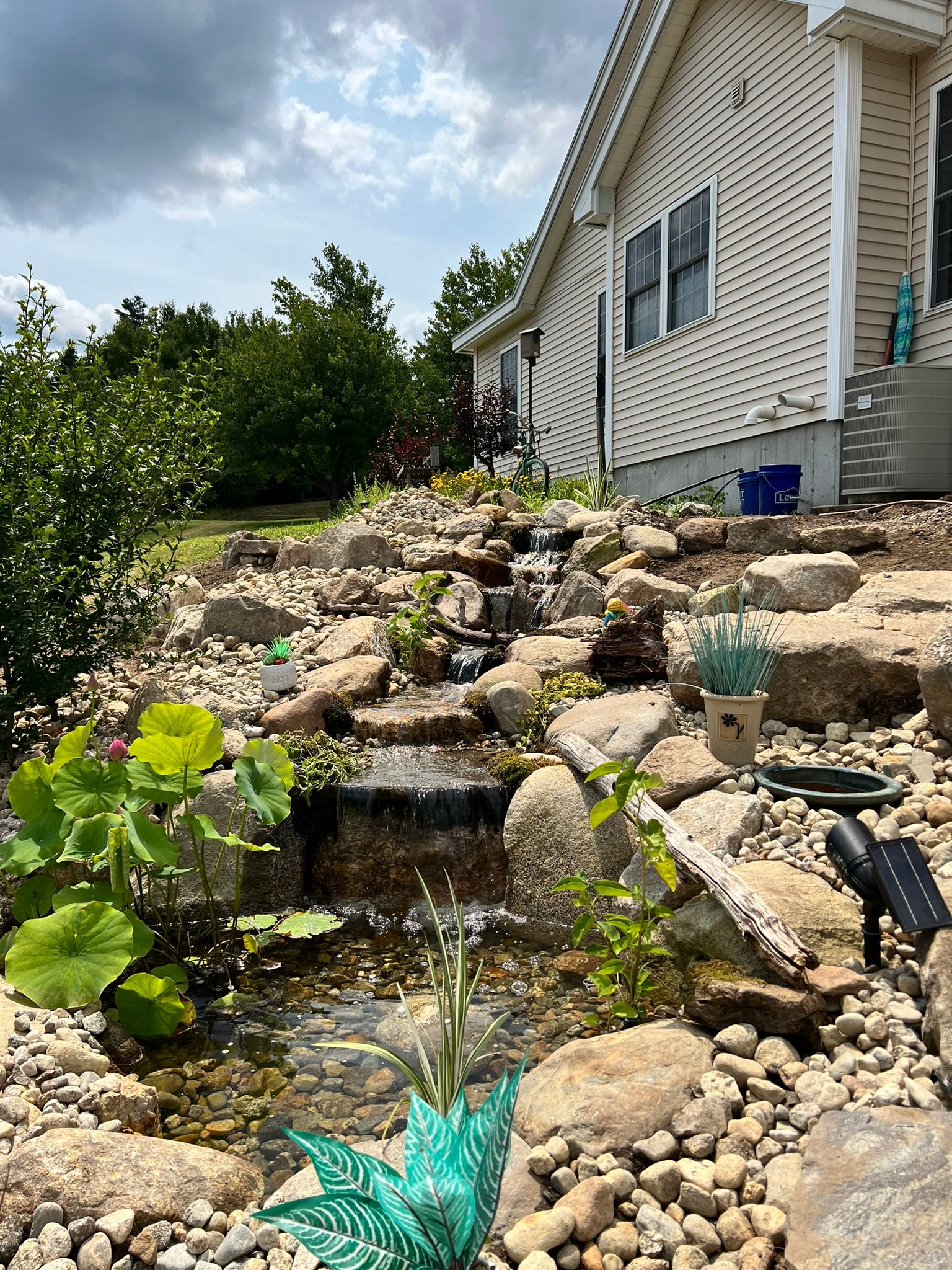
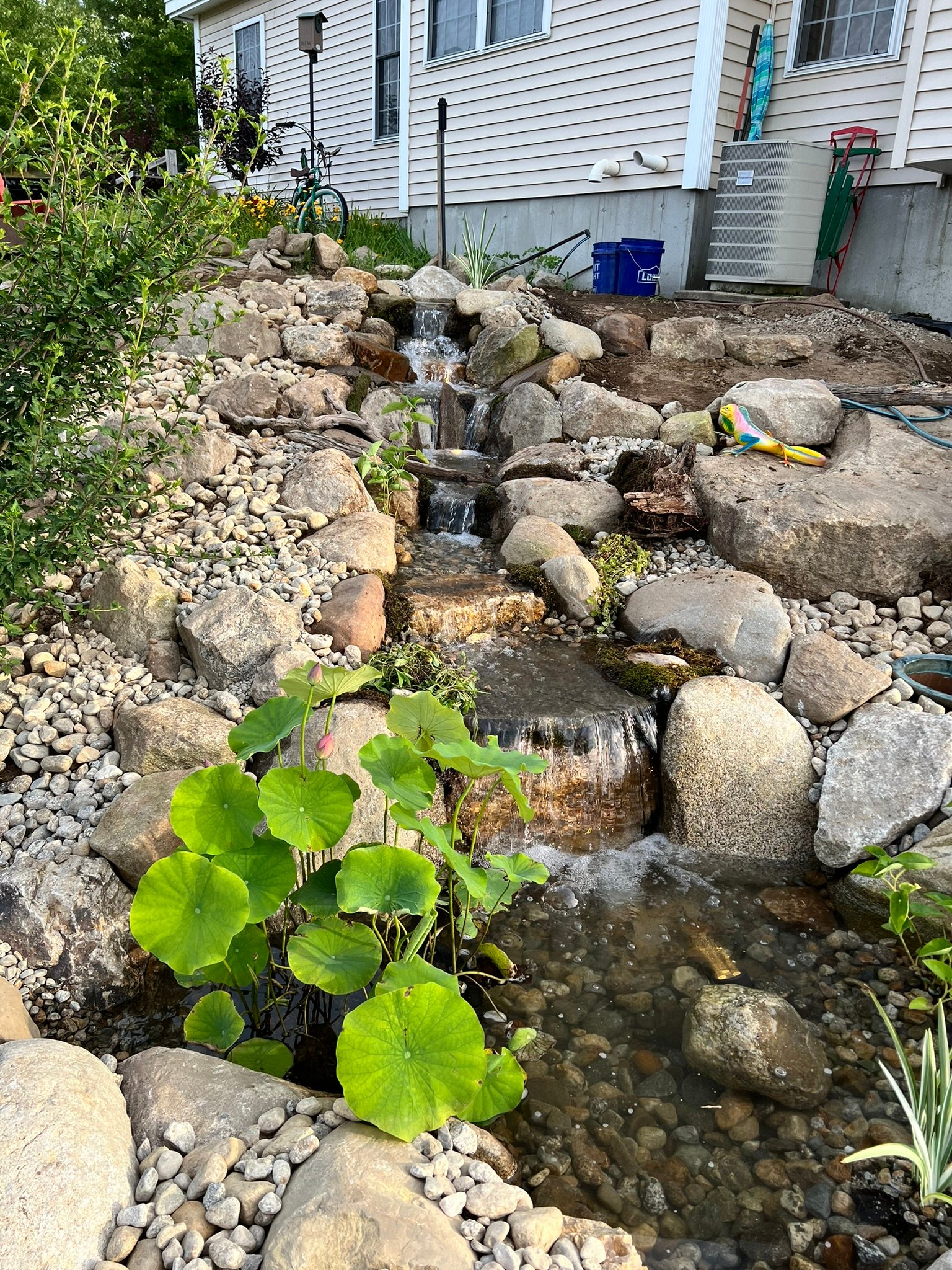
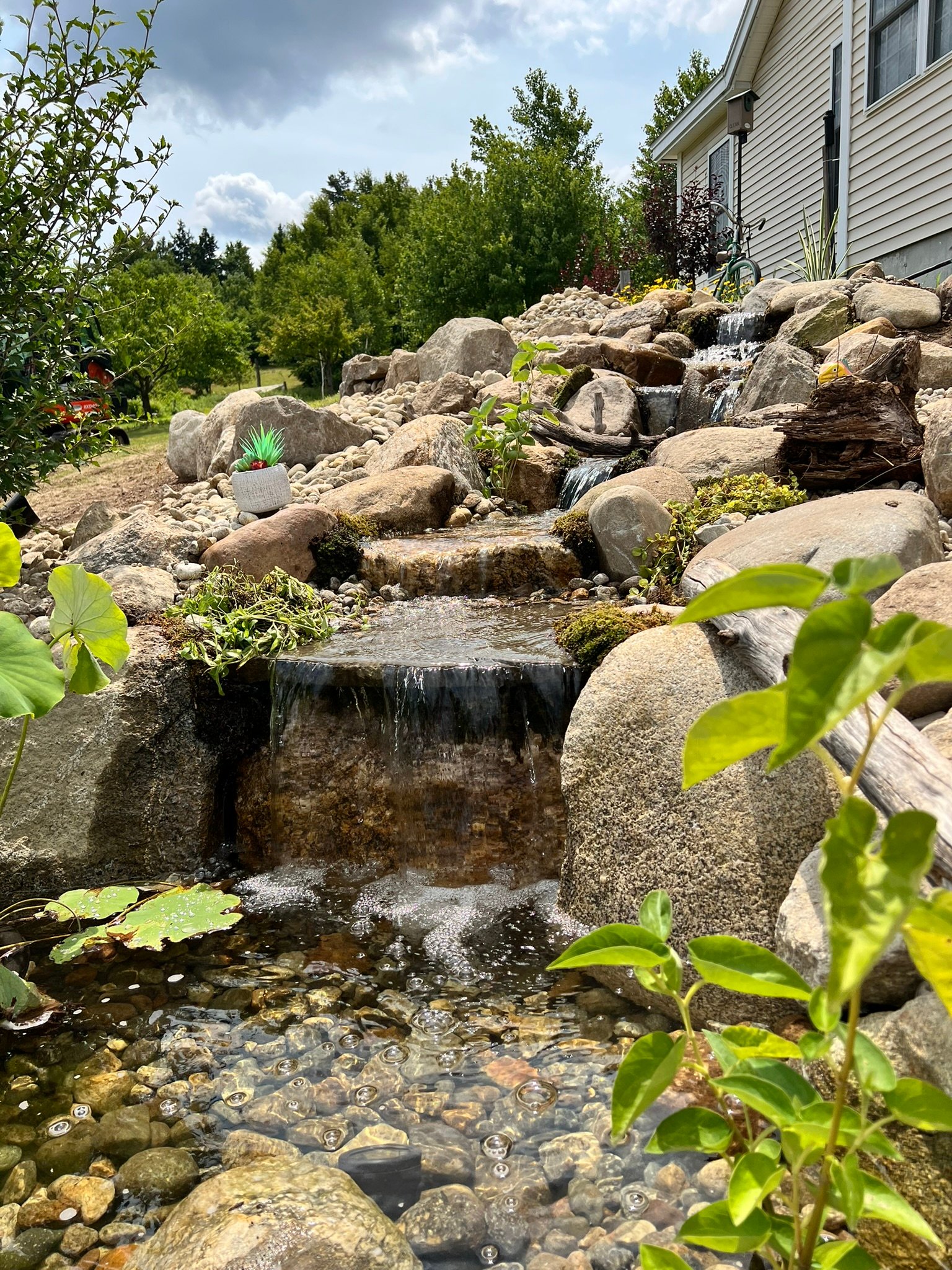
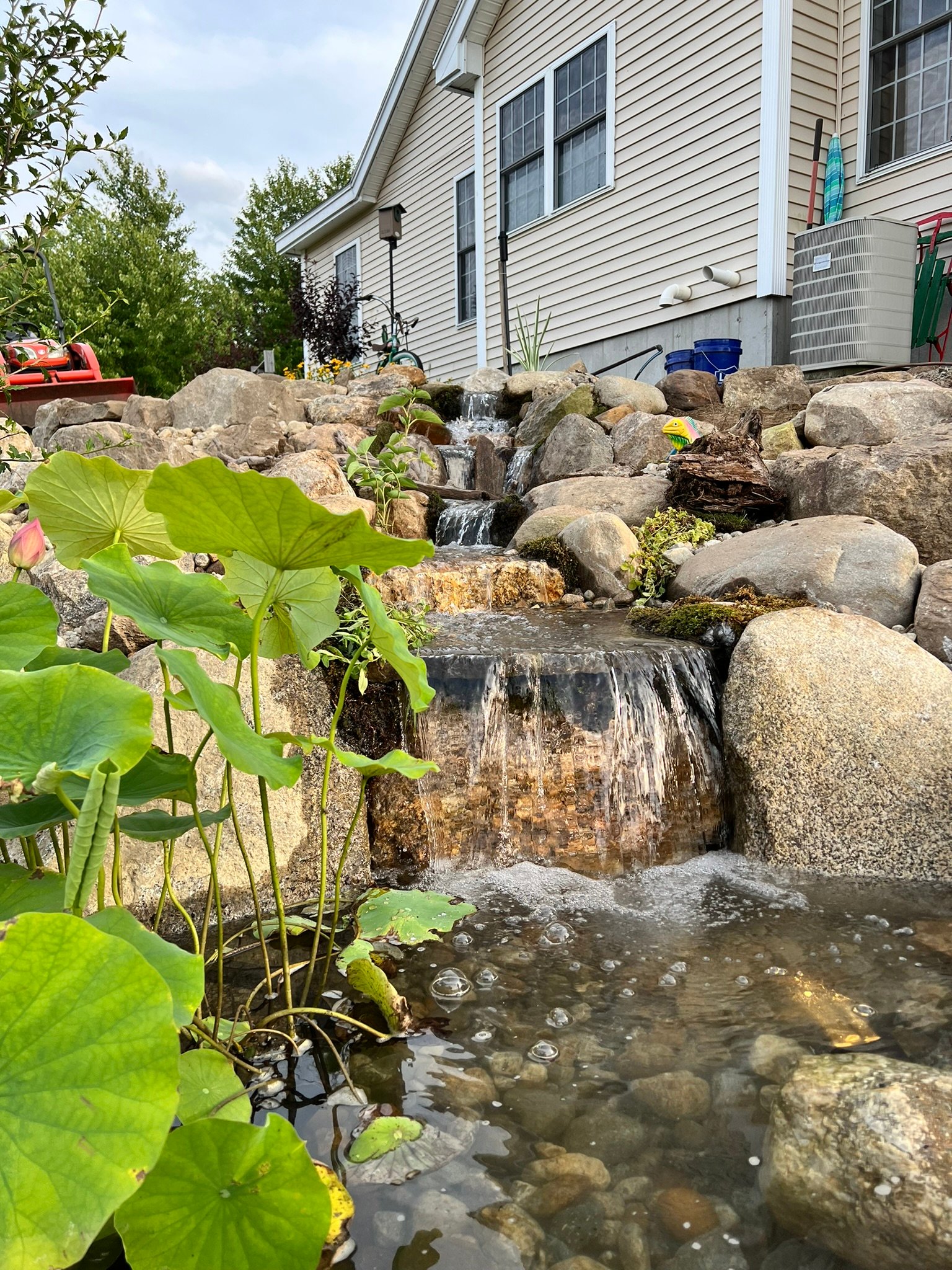
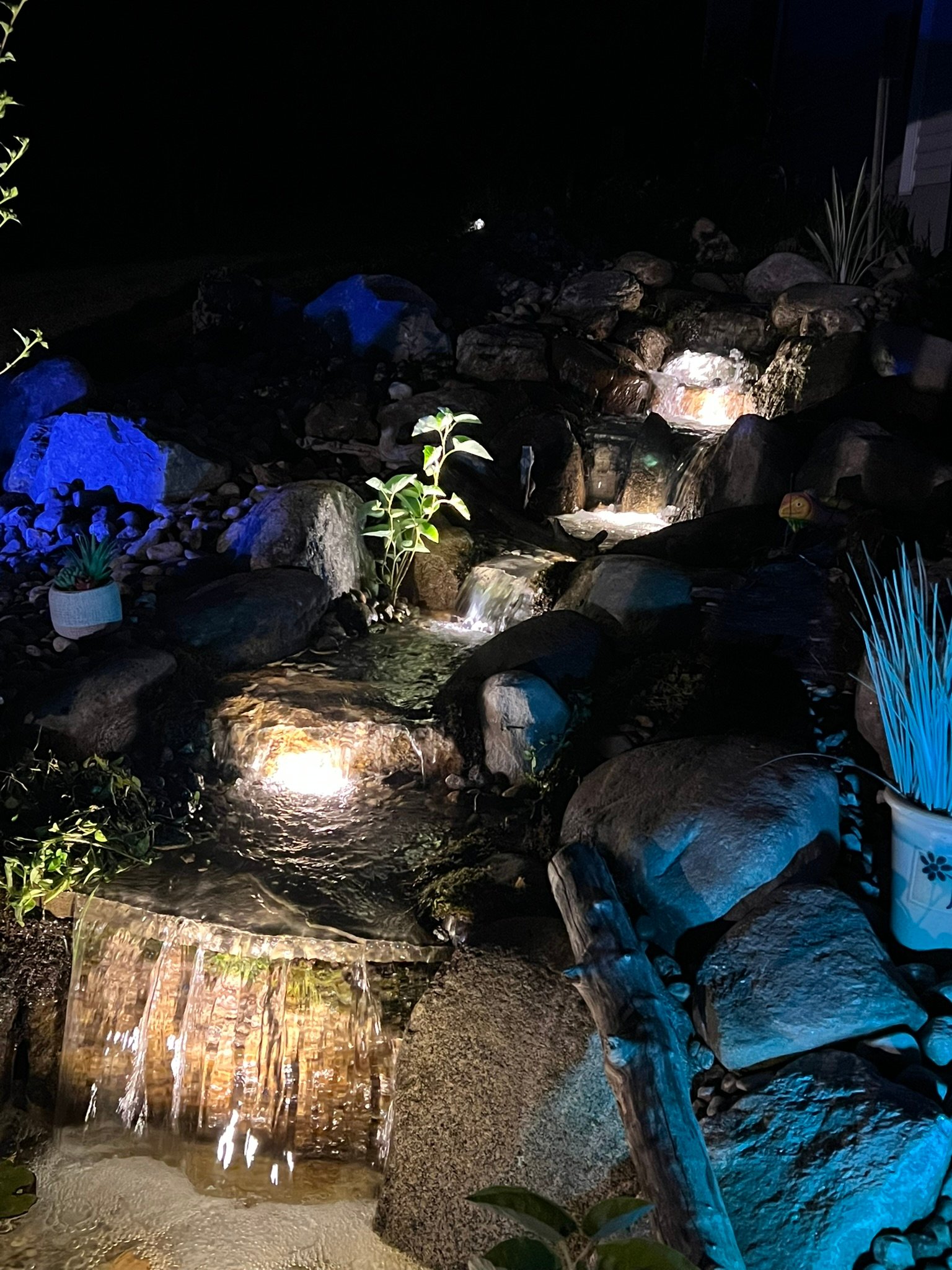
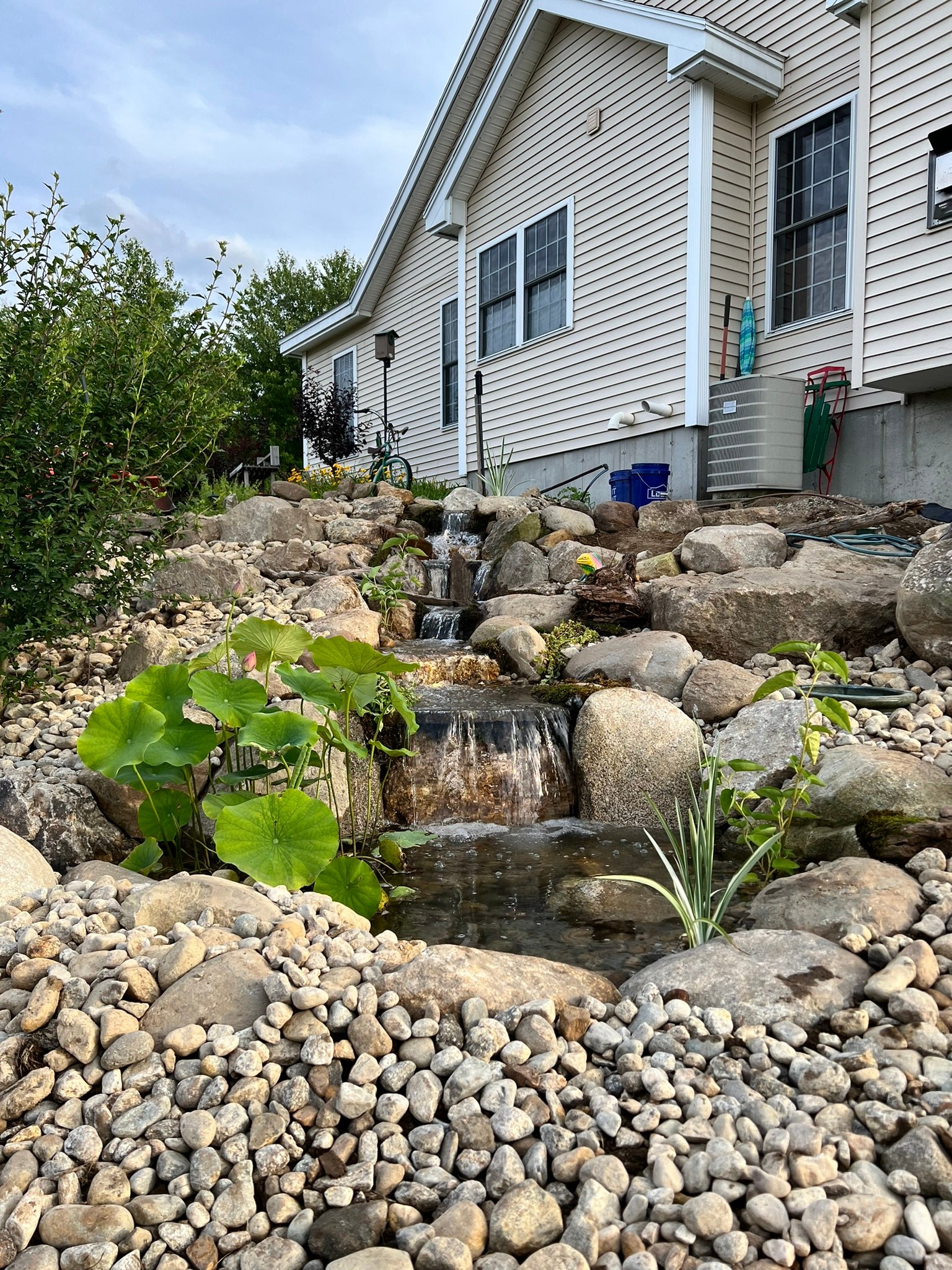
This project featured rebuilding a 15′ pondless waterfall.
Rebuilding a Pondless Waterfall in New Boston, NH
When we were contacted by the homeowners in New Boston, New Hampshire, they already had a pondless waterfall in their backyard. The homeowner had taken on the original construction himself, but after living with the finished feature, he ultimately wasn’t happy with the way it looked or functioned. Rather than simply making a few adjustments to the existing waterfall, we were brought in to completely rebuild the feature and create something that felt more natural and better integrated into the landscape.
The project was centered around an approximately 15-foot pondless waterfall built into a naturally sloping portion of the property. From a water feature builder’s perspective, a natural slope like this is an exciting opportunity. Instead of having to manufacture elevation with retaining walls or excessive amounts of imported material, the existing grade can become part of the waterfall itself. The challenge is turning that natural elevation into a feature that looks as though it belongs there.
When we began dismantling the existing waterfall, we discovered just how much material had been used to create the original structure. Beneath the liner were more than 60 cinder blocks, which had been used to construct the various levels of the waterfall. While block and other structural materials can have their place in certain landscape applications, our approach to natural water features is different. We wanted the finished waterfall to derive its shape and character from the natural contours of the earth, boulders, and carefully placed rockwork rather than relying on a rigid manufactured structure beneath the liner.
For the rebuild, we used the same Aquascape methodology that we apply to our other pondless waterfalls and ecosystem ponds. Instead of building the entire waterfall structure first and simply covering it with stone, we worked with the existing slope and cut individual shelves into the earth for each layer of the waterfall. These shelves established the elevations and provided a foundation for the large boulders and supporting rockwork.
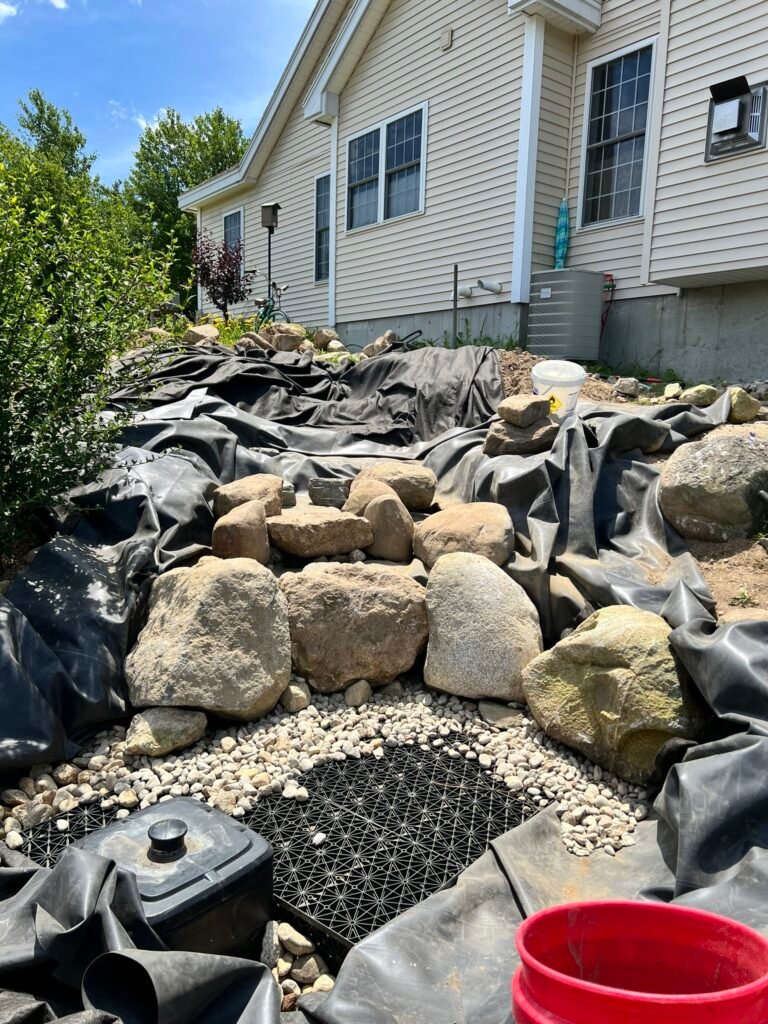
This approach allowed us to build the waterfall from the ground up in a way that mimicked how water would naturally move through a rocky landscape. Large boulders established the primary structure and created the major changes in elevation, while smaller rock and gravel were incorporated around them to transition between the different sections of the waterfall.
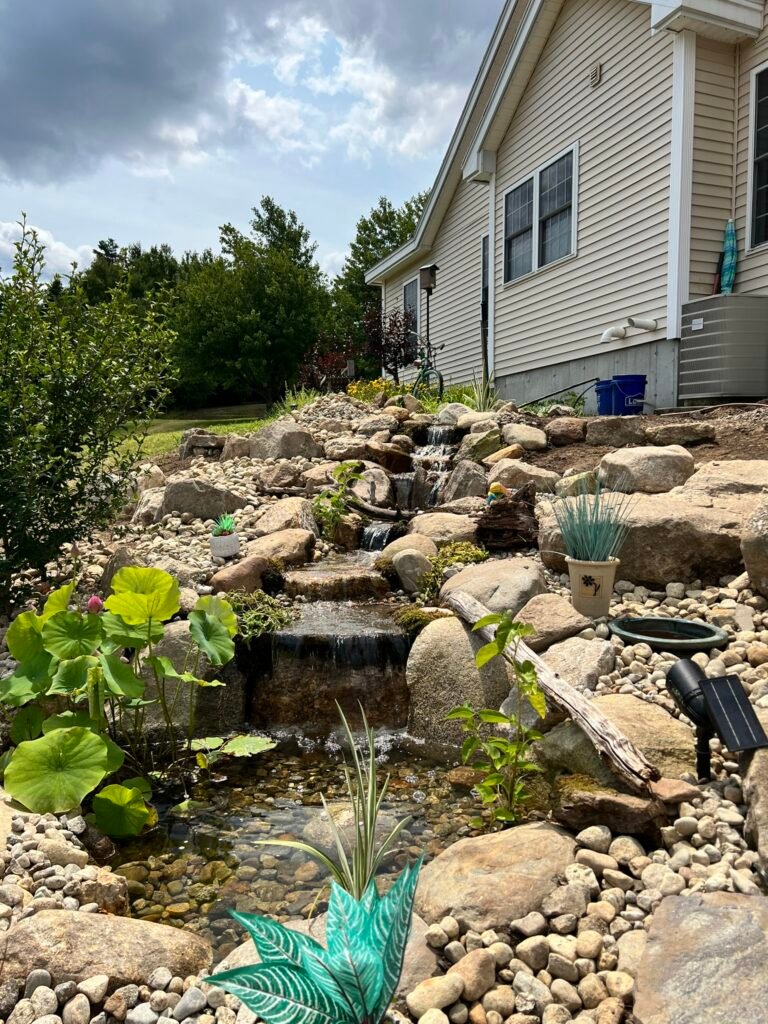
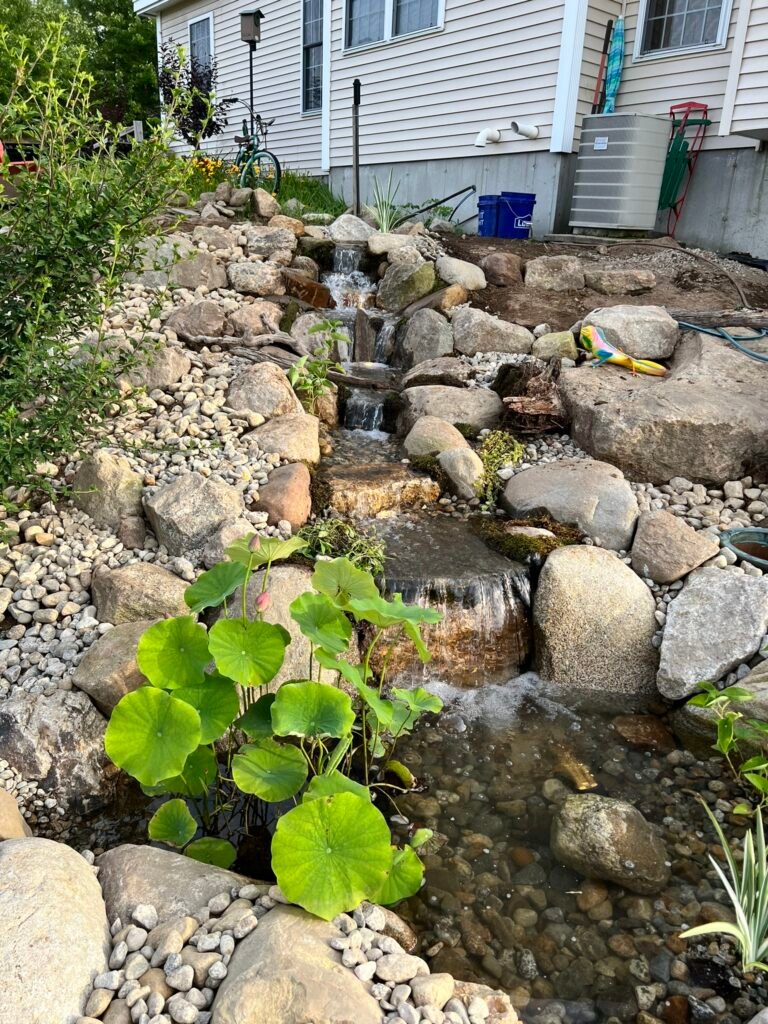
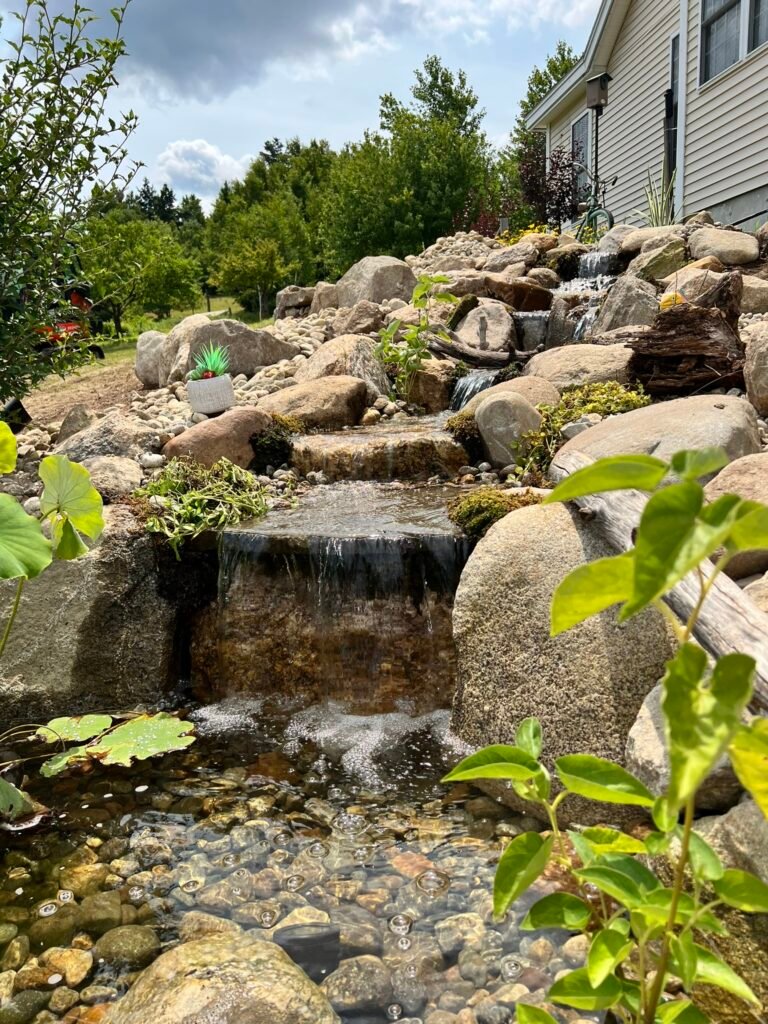
One of the most important parts of building a natural-looking waterfall is avoiding the appearance of a series of identical drops stacked on top of one another. Nature rarely creates perfectly uniform steps. Instead, water finds its way around and over irregular rock formations, creating areas of faster-moving water, small pools, drops, and transitional sections. We used the available slope to create that variation throughout the 15-foot run.
The result was a waterfall that felt much more integrated into the property than the original installation. Rather than seeing the underlying structure, the homeowners were able to see natural stone, boulders, and moving water working together as a cohesive landscape feature.
The pondless design was also particularly well suited to the space. A pondless waterfall provides the sound, movement, and visual interest of a traditional waterfall without requiring a large open pond at the bottom. The underground reservoir allows the water to disappear naturally at the base of the feature before being recirculated back to the top. This creates a relatively compact water feature while still providing the sensory benefits of moving water.
For us, this project was a great example of why the underlying construction methodology matters. A waterfall can be made to work using many different methods, but creating one that looks natural requires more than simply stacking rocks around a liner. The grade, excavation, liner, shelves, boulders, rockwork, and water flow all need to work together. When those elements are considered from the beginning, the finished feature can look as though it was shaped by the landscape itself.
Perhaps the best indication of how successful the rebuild was came the following year. After living with and enjoying their new pondless waterfall, the homeowners contacted us again to design and build a koi pond for their property.
What began as a rebuild of a waterfall they weren’t satisfied with ultimately became a much larger relationship with the homeowners and another opportunity to incorporate water into their landscape. The experience reinforced something we value about our work: building a water feature isn’t just about creating something attractive on the day we leave. We want to create features that homeowners continue to enjoy and that inspire them to incorporate more of the natural beauty and tranquility of water into their outdoor spaces.
The New Boston project was a particularly rewarding example of that philosophy. By removing the rigid structure of the original installation, working with the property’s natural slope, and rebuilding the waterfall using natural boulders, carefully constructed shelves, and intentional rockwork, we were able to rebuild a feature the homeowners were proud to live with—and ultimately the first step toward creating an even larger water feature on their property.
“Mike is an amazing artist, we love our Koi pond and Waterfall, he is talented and can be trusted to do a great job, anyone considering a Koi pond reach out and we can arrange a viewing of Mikes work” – Paul
Dreaming of a New space? We can help.
This Koi pond merrimac ma project featured the installation of a 11×16 Ecosystem koi pond, a large patio and pergola.